




Budget Basics
Consumers' most valuable tool. Budgeting begins with reason to save

By Dave Burge / El Paso Times
Article Launched: 05/14/2007 12:00:00 AM MDT
Whether you want to save more for retirement, pay off your credit cards or build an emergency "rainy-day" fund, a key step is creating a budget to help guide you, experts say.
"Budgeting is really the fundamental building block toward achieving financial security," said Greg McBride, a senior financial analyst with Bankrate.com. "Unless you have a handle on where your money is going, you will not be able to maximize your savings and investment opportunities."
East-Central El Paso resident Rosemary Gonier said creating a budget is "an important and smart way" to keep track of your money. "Before I made a budget, I'd look at my wallet and ask, 'Where did all my money go?' " Gonier said. She has adhered to a budget for about six years and usually updates it twice a month to make sure she's on track.
Her budget has helped her build an emergency savings fund and decide how much she can spend on clothes and going out to eat or to the movies, she said. Central resident Marissa Guerrero said she's been doing a budget for about four months and agrees that it's a valuable tool for tracking expenses. "I used to spend a lot of money and did not know where my money was going," Guerrero said. "Now I know exactly where it went, how and when."
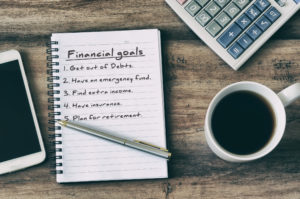
To get started, experts say, set a goal, track your monthly income and expenses, and create a budget based on that. Keep in mind that a budget is a plan that helps to guide you along, experts add. It is not written in stone and can be adjusted. "Start with words, not numbers," said Mike Sullivan, director of education for Take Charge America. "It's about planning to buy a house, save for the kids' college education or your retirement." Start by coming up with a reason to have a budget, he said.
"Most people get their check and they spend it," Sullivan said. "If you have a goal you want to accomplish, you're more likely to think about and spend your money wisely." You also need to be realistic. Make sure your budget contains some money for fun and entertainment, Sullivan said. "We all need a bit of fun, but you don't need to go crazy," he said. You can go to the discount theater to see a movie or go to a matinee to save on the admission cost, Sullivan suggested.
Budgeting can help you create a three-pronged savings strategy, said Maureen Hankins, director of the El Paso YWCA's Consumer Credit Counseling Service. You need to save to build an emergency fund, so you don't rely on credit cards when life throws you a curve, Hankins said. You should also save up to pay cash for things you want to buy, while at the same time saving for retirement, she said. A budget "will help you control overspending on things you don't need," Hankins said.
Howard Dvorkin, founder of Consolidated Credit Counseling Services Inc., said budgeting isn't fun, but is a crucial step toward financial success. "Anybody can think of about 100 things they'd rather do than sit down at the kitchen table and budget," Dvorkin said. "It's something that's necessary if you're running tight, and even if you're not, it's a smart thing to do."
El Paso certified public accountant Kym Anderson, with Jones & Co., said a budget can help you take control of your finances and even boost your self-esteem. "People get so wrapped up in, 'I have a bad job or I need more money,' " Anderson said. "Look at the things you can control. If you take control of your money, you'll feel better about yourself."
Some tips to make a successful budget:
Track your expenses for at least a month, experts said. Carry a notebook with you and write down every penny you spend. Include items you paid for with cash, check or credit, experts add. "We call this plugging the leaks," Hankins said. "Look at how much you spent on coffee or doughnuts, buying Cokes every day or taking the kids out to McDonald's." By tracking your expenses, you'll get a better idea of how much money you're spending and where. You can use this information to identify areas you can trim. The resulting savings can be put into a savings account or invested, experts say.
Once you've tracked your expenses, McBride said, categorize them into broad types, such as groceries, car payment and maintenance and mortgage payment. McBride also suggests that you set realistic spending limits for each category, budget for the unexpected, track every dollar you earn and spend during a month to keep yourself accountable, and revise your budget when necessary.
Adhere to the principle of paying yourself first. Create a realistic savings goal and then treat it like a monthly bill that you pay to yourself. If you immediately put the money you want to save into a separate savings, investment or retirement account, you won't even miss it, experts say. Dvorkin says your savings program should also include participating in your company's 401(k) plan. Many companies make a matching contribution, so if you don't participate, you're leaving the equivalent of free money on the table, experts say.
Hold yourself accountable. Take a look at how you did at the end of each month. If you were unable to adhere to your budget, ask yourself why.