






ESPAÑOL   |   ENGLISH

Holidays

Lest we forget, Christmas is not about the presents we give each other

By Michelle Singletary
Sunday, November 21, 2004

Black Friday is approaching fast.

In case you don't know, Black Friday is the day after Thanksgiving. It is dubbed as such because traditionally it's the day that retailers go from being in the red to being "in the black," or earning a profit.

But the day after Thanksgiving should be called "Red Friday" for consumers. That's because for many of them, it's the day they move into the red or dig deeper into debt because they shop till they drop with money they don't have.

Recently, I received a letter from an Ohio woman who is searching for a way to persuade her husband to cut their holiday spending.

"Terror is far outweighing anticipation for me this year," the woman wrote. "I really need to convince my super-generous (read spendthrift) husband that we can't be the cool aunt and uncle with the best presents anymore. It's a front we can't afford to keep up."

I do have something for this woman, and for you too if you want a happy holiday without red ink on your balance sheet.

Read "Hundred Dollar Holiday: The Case For a More Joyful Christmas," by Bill McKibben (Simon & Schuster, $12). It's one of my favorite financial books because it helps me remember that Christmas is not about the presents you give.

In fact, McKibben encourages families to spend just $100 for everybody at Christmas. Now, before you dismiss this recommendation as absurd, take a moment to consider the following:

.The average household has close to $9,000 in credit card debt.

.The average gift list consists of 10.5 people and shoppers here in the Midwest allot about $56 for each recipient, according to a survey by MACResearch, the research arm of a shopping mall investment and management company.

.Holiday gift-buying is the No. 1 category that consumers overspend on each year, according to InCharge Institute of America, a credit counseling group. In a survey commissioned by InCharge, 75 percent of young people aged 18-29 who were interviewed indicated that they were likely to overspend.

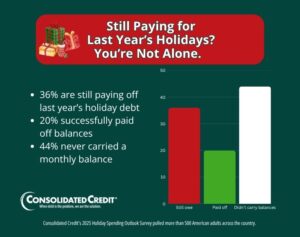
.In a holiday spending survey commissioned by Consolidated Credit Counseling Services Inc., 54 percent of respondents said they are still paying off debt from last year's holiday season.

Take a moment to think about that last point: More than half the people interviewed were still paying off holiday debt from the previous year. That is insane.

I've tried McKibben's suggestion to spend just $100 for the holidays. I didn't quite keep to that goal. One year, I spent $137.80 (I went a little crazy on decorations).

Not all my family members were happy with our homemade gifts. But I have to tell you, when my husband and I reduce our spending and concentrate on spending more time with family and friends, we have a wonderful holiday.

In helping start the hundred-dollar holiday movement, McKibben was simply trying to show people how to have a more joyous Christmas.

"The hundred-dollar goal seems to work well as a check, a way of saying that your commitment to a better Christmas goes beyond merely complaining or telling yourself that this year it will be different."