




Sunday July 21, 2002
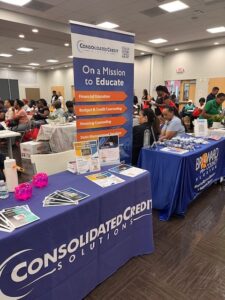
I like to think of myself as a fairly intelligent, financially sophisticated person. I know that big businesses don't always have my best interests at heart, that the customer is rarely right. I pride myself on not being a sucker. So you can imagine my annoyance when I read my most recent MasterCard bill and noticed two annual percentage rates: 14.5 percent for purchases and 19.99 percent for $300 cash advance I took out in February. As a rule, I pay my credit card bill in full, or at least in large chunks. I try to keep my balance below $3,000. What I didn't know was that my payments didn't cover cash advances. I also didn't know that I was being charged a monthly rate for purchases but a daily one for the advances (or that it's possible to have several A.P.R.'s on one card). I called Citibank and asked how to pay off the cash advances. Online? Impossible. At the A.T.M.? No. In person at the bank? Sorry. Although I can do just about all my banking electronically these days, short of having my PC spit out money, I was told that I cannot pay cash advances that way. I had to send a check to a special unit, thereby accruing even more interest charges until the check arrived. You probably think that I'm a little naïve, but I was genuinely stunned. If I'm finding all this a bit confusing, how about other young people, particularly college students and recent graduates? Within weeks of arriving on campus, most students are bombarded with credit card applications. "College kids are a good market - the balances are low, so the risk to the lender is very small," said Howard Dvorkin, the founder of Consolidated Credit Counseling Services in Fort Lauderdale, Fla. Seventy-seven percent of full-time undergraduates at four-year schools have credit cards, according to a 1999 study by Michael E. Staten, a business professor at Georgetown University. While many students can manage their debts, some with help from their parents, others run into problems. A recent report by the National Center for Education Statistics found that 41 percent of graduating college seniors had $3,000, on average, in credit card debt. Kevin Rubel, 22, was a student at Northeastern University in Boston, majoring in marketing. In three years, he had maxed out five cards, for a total of $6,000. That, compounded with $15,000 in loans, left him deep in red ink. He had to move back home to West Palm Beach, Fla.; he is now a senior at Florida Atlantic University. He also works two bartending jobs and pays Consolidated Credit Counseling Services $500 to be distributed to the credit card companies "This is the toughest year of my life," he said. "There should be restrictions on credit card companies. They shouldn't be allowed to do what they do." Some schools, like Georgetown University and the University of California at Irvine, have banned credit card solicitation on campus; the State of Arkansas requires universities to offer credit seminars at freshman orientation. The MBNA Corporation , a credit card giant that issues cards to students, conducts such sessions on campuses, as does Mr. Dvorkin's service.