






ESPAÑOL   |   ENGLISH

Holidays

Before you shop, beware the price of debt

By PAMELA YIP
Dallas News

As you're making out your holiday shopping list, here are some more reasons to practice restraint. Too much debt can affect your job performance, your health and your personal relationships.

As many as 80 percent of financially distressed workers spend time at work worrying about their personal finances, according to E. Thomas Garman, a professor emeritus at Virginia Tech, where he directed the National Institute for Personal Finance Employee Education.

Mr. Garman's studies showed that workers with money problems may take time from work to talk with co-workers about personal financial problems, communicate with creditors about past-due payments, pay personal bills, balance a checkbook or talk to a lender about a debt-consolidation loan.

"It's an ugly situation for employers when more and more workers are distressed about their personal finances and running hard just to keep their heads above water financially," Mr. Garman said.

Because the stakes are so high, you should seek help at the first signs of financial trouble, such as the inability to make even the minimum payment on your credit card, paying only one card because you can't afford to pay the others, not knowing how much debt you have and maxing out on your credit cards.

Some protection

Federal law gives consumers the ability to stop collectors' calls.

The Fair Debt Collection Practices Act says a collector may contact you in person or by mail, telephone, telegram or fax. However, a debt collector may not contact you at inconvenient places or times, such as before 8 a.m. or after 9 p.m., unless you agree to be contacted at those times. (And who in their right mind would agree to that?)

A debt collector may not contact you at work if the collector knows your employer disapproves. They may not harass, oppress or abuse people.

Ms. Cunningham said her husband, who owns a commercial janitorial service company, has about 50 employees and often receives as many as 15 collection calls per day for his employees.

"The collectors are very persistent," she said.

To stop a debt collector from contacting you at all, you can write to them telling them to stop.

"It should be noted that sending such a letter does not make the debt go away, just the calls," Ms. Cunningham said. "You could still be sued by the debt collector or the original creditor."

"Debt is something that follows you around, and you cannot give 100 percent to your job when you're worried about debt," she said.

Plus, if you're in a sensitive job, such as in the military, maintaining a good credit history is essential. Falling behind in your bills in the military can get your security clearance yanked, because of the fear that you'll do something inappropriate to fix your finances.

It all adds up

It's that pressure that affects a person's work.

"Once the employee gets behind, the situation snowballs," Ms. Cunningham said. "Then, he often turns to payday loan companies or other high-interest lenders. The employee will frequently ask the employer for an advance on his paycheck or personal loan."

Stress from debt can also affect your health – not a surprise – and money problems can ruin your personal relationships. Financial difficulties are a major factor behind many divorces, and failure to repay a loan from a relative or friend can destroy the relationship.

To help you get a head start in spending properly for the holidays, Ms. Cunningham will answer your questions about getting – and staying – out of debt during a live online chat at 11:30 a.m. today on DallasNews.com. Send advance questions to chat @dallasnews.com.

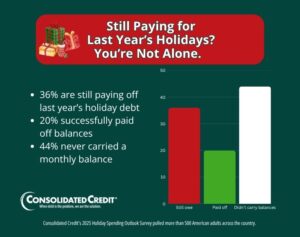
"My theme will be, it's such a shame that people are going into the holiday buying season of 2006 still paying for what they purchased in 2005," she said.