





Holidays
Beware of budget breakers, macking a gift list and checking it twice can keep you from getting into debt
By Mary Ann Milbourn
The Orange County Register
When it comes to holiday budgeting, Barbara Hallberg thinks Goodwill. That's not as in "good will toward men," but Goodwill, the store.
"I've saved tons of money," says the Garden Grove resident, who swears by the store at Magnolia and Katella avenues, where she often finds brand-new toys and books. "You can shop there and find bargains if you look."
Hallberg isn't talking chump change either. She estimates she saves $1,000 every holiday season by doing her shopping at Goodwill.
Financial experts wish more people would think like Hallberg and save themselves a lot of financial woe. Too many people, however, get caught up in the holiday come-ons and end up busting their budget, assuming they had one in the first place.
The numbers aren't promising. Among this year's findings:
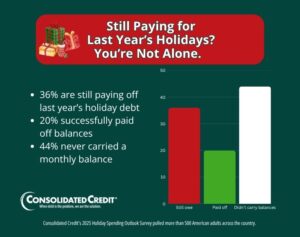
Forty-six percent of consumers surveyed by Consolidated Credit Counseling Services Inc. are still paying debt from last year's holidays.
•More than half of consumers surveyed by Visa expect to spend $500 to $1,000 on holiday gifts and entertaining this year, and 26 percent estimate their holiday tab will be $1,001 to $2,500.
•Sixty-four percent of people with household incomes under $50,000 say they wouldn't be able to pay off a zero percent financing or no payments/no interest offer before the promotional period ended, according to a survey by TransUnion's TrueCredit .com.
Experts say the best way to avoid getting into financial trouble over the holidays is to plan.
"Make a list and check it twice," advises Lucy Duni, director of consumer education at TrueCredit.com. "You should review not only who's on the list but include gift ideas and prices." In many cases, she says, a better way to go is not to buy something, but give a gift of time or make something that would have special meaning to the recipient.
Donald Lichtenstein, a business professor at the University of Colorado in Boulder, urges people to be smart shoppers by doing comparison shopping.
"No matter what information is made available to shoppers, most people still engage in surprisingly little search behavior before making a purchase," he says. "They have the Internet at their fingertips, and yet they're just as likely to buy from the first merchant they go to."
He also warns shoppers not to get taken in by money-back promotions. "You'll see a store that says, if you find a lower price within 30 days, we'll give you 110 percent of the price difference," Lichtenstein says.
The stores know, however, that most consumers will buy based on the promotion and not check other prices, so the company will never have to pay off on the promise.
Holiday shoppers also need to really think about what a credit card purchase now means for later, says Gail Hillebrand, senior attorney at the consumer advocacy group, Consumers Union.
"If you put $1,000 on a credit card and only make the minimum payment, it will take you eight years and 10 months to pay it off, even if you don't charge another dime," she says. Promotions that promise no payments or no interest for six months or a year also can be a financial trap. "If you don't have the money in December of 2006, you're probably not going to have it in December 2007," Hillebrand says.
Consumers also need to be aware that if they fail to make a payment on one credit card, it could affect the rates on all their cards. "I had one consumer who saw their rate go from 7.2 percent to 27.2 percent," she says. "If you are having any financial problems, having a credit card rate that quadruples isn't going to help you solve the problem."
The experts' best advice for staying within a holiday budget? Whenever you're thinking of pulling out your credit card to buy something, ask yourself this simple question: "Would I buy this if I had to pay cash?"