




ESPAÑOL   |   ENGLISH

Holidays

Recovering From Excess Spending: Holiday Hangover

By Laurie Winslow
Oklahoma World Staff Writer

Feeling a bit melancholy after the holiday?

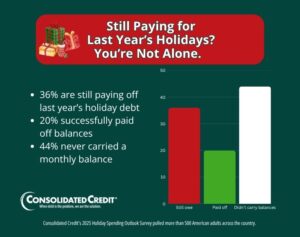
Now that all the excitement is over, the family gone, gifts unwrapped and the debt hangover building, no wonder post-holiday blues are so prevalent.

Debt, especially, is an unwelcome surprise that many gift-givers unintentionally give themselves.

The question is how does one dig out of holiday debt once it's been heaped on?

Essentially, the first thing people need to do to ease debt is stop using credit cards, said Howard Dvorkin, founder of Consolidated Credit Counseling Services Inc., during a phone call from Fort Lauderdale, Fla. If people keep charging on their credit cards while trying to pay down their debt, they're not going to get far.

Secondly, he advises sitting down at the kitchen table, spreading out the bills and figuring out how much is owed.

"Most people don't know how much they owe when they come to us," he said.

Usually, they're a couple of thousand dollars off what they think they owe, which is a significant amount, Dvorkin added.

"The bottom line -- you've got to have some kind of repayment plan and decide how much you can allocate to the repayment of the debt. And usually people get into debt without a plan," said Steve August, a certified financial planner with Vineyard Financial Group in Tulsa.

On a piece of paper, list all of your debts, whom you owe and the interest rates being paid for loans and each credit card.

Usually, credit cards are the ones you want to attack first because they carry higher interest rates than home and car loans, August said.

Dvorkin suggests paying off the highest interest-bearing credit cards first and tripling minimum payments if possible.

Another option is to transfer balances from higher interest-bearing credit cards to those with lower interest rates.

One strategy is to pay off the lowest credit card amount first. So, if you have a balance of $1,000 on one card and $3,000 on another and $5,000 on still another, tackle that lowest one first.

"When that gets knocked out, use that money and add it to the next-lowest one," August said. "You can get some reward by paying off the smaller amounts first because (you) can knock those out quicker."

You also could call your credit card company and ask to have the interest rate lowered. "They spend a lot of money on obtaining credit card holders, so they don't want to lose those folks," Dvorkin said.

Other options include taking a loan from a relative or refinancing your house to pay off unsecured credit card debt, but neither idea is particularly smart if people continue using their credit cards and accumulating debt, Dvorkin said.

He also suggests calling a credit counseling agency for advice and having a trained expert figure out what option is best.

"We are able to go through and quickly and efficiently identify the best course of management," he said.

Once you get rid of the debt, start saving for next Christmas. Go through your budget and identify places where you can cut out expenses.

"No matter how frugal you may be, you still have fat," Dvorkin said. "I can look at that budget and pull out 15 percent of the fat -- stuff that you don't need -- and it won't change anybody's lifestyle one iota."

He lists several examples, such as eating out less, scrutinizing cell phone and TV programming plans, and examining life insurance coverage.

Over the course of the year, even small things can add up.