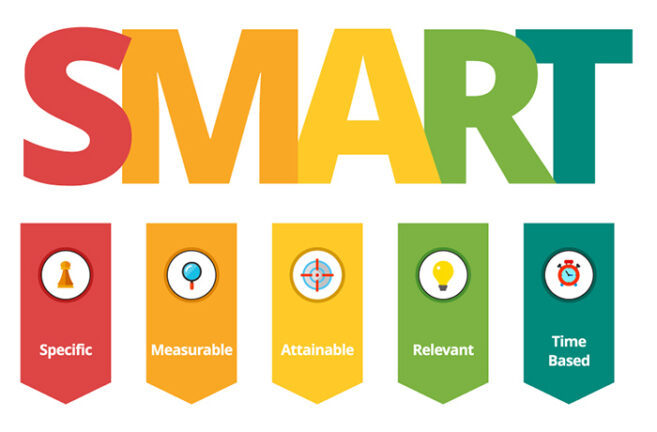
What’s the difference between a SMART goal and a regular goal?
A standard goal simply expresses a desire, such as, “I want to save money.”
The problem with a goal like that is that it’s not defined in a way that fosters success. You may save money out of a few paychecks, but there’s not any motivation built into the goal. Instead, you should create a more specific goal:
- “I want to save $100 per month for 6 months so my family can take a debt-free vacation.”
- “I will open a Roth IRA this month and set up automatic contributions of $200 per month to feed my retirement fund $2,400 over the next year.”
- “I want to save $100 per month for one year to replace my laptop without relying on credit.”
All of these goals still support your ultimate goal to save money. But they give you specific amounts and specific amounts of time you have to accomplish what you want to achieve. It works the same way with a goal to pay off debt. Becoming debt free is a great aspiration, but you need a goal that’s clearly defined to help you get there:
- “I will pay $500 per month for 12 months to eliminate my $5,000 credit card debt within the next year.”
- “I will make 3 extra payments of $1,000 each this year on my auto loan to eliminate the debt in-full before the end of the year.”
- “I will consolidate my debt with using a balance transfer credit card and then pay off the balance in the first 12 months before the 0% APR introductory period ends.”
How to set and achieve a SMART goal
Step 1: Decide what you want to do
This means focusing on the end endgame of your financial goal. If you want to save, what are you saving up to do? If you want to eliminate debt, where do you want to start? The more specific you make the endpoint of your goal, the easier it will be to define the rest of it.
Step 2: Assess your available cash
Review your budget to see how much money you have available for this new goal. If you already save money each month then you may be able to allocate some of those funds. If not, you may need to tap your free cash flow or eliminate some discretionary expenses in your budget. In any case, see what you have available so you can plan accordingly.