




Budget Basics
Dollar Discipline
Budgeting isn�t glamorous. But with a national savings rate of less than 1 percent, it�s time we all started monitoring our money.
Sunday, January 01, 2006
Kris Frieswick
Spirit Magazine
Mr. Frugal was right, of course. Today, it's pouring on millions of us. The rate of credit card late payments hit an all-time high in July, the savings rate is -0.6 percent (which means we spend more money as a nation than we make), and a reformed bankruptcy code has slammed shut the window of absolution for many of those in the tightest financial sneakers. Suddenly, budgeting is starting to look like the new black.
For those bravely sailing into the world of financial discipline, the range of budgeting theories and books available can leave you understandably confused about where to start. Theories on budgeting range from the parsimonious to the perverse. One budget theorist recently floated a concept that suggest that you figure out your total annual expense for a particular line item � say a magazine subscription � multiply that amount by 25, and put that amount of money into an interest-bearing account paying 4 percent. Voil�! The interest will fund the expense in perpetuity. Dude, if we had that much money in our bank accounts, we wouldn't be worried about paying for a magazine subscription, would we? Such theories are much of the reason why eyes continue to glaze to this day.
But like it or not, budgeting is a necessity got even the wealthiest among us.
"You can do financial planning actively or you can have it done for you," says Dr. Bill Gustafson, director of the Center for Financial Responsibility at Texas Tech University in Lubbock. "Just try to not make your car payment and see what happens. Even people who don't have a budget still make choices everyday."
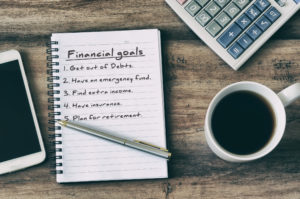
The difference between active budgeters and passive budgeters is that active budgeters have a goal. For some, that goal is putting food on the table and paying the bills each month. For others, the target is paying down debt, funding a college education, building a retirement consumers account, or saving a down payment for a first or second home. Some experts try to make budgeting seem less ghastly and non0fun by reminding people that creating and adhering to a budget can make your dreams come true faster and more completely that you ever imagined, if you simply make the behavioral changed necessary. Of course, when one realizes that this means an end to Mall Assault Saturdays and Thursday after-work pizza and beer parties those faraway goals don't seem quite so compelling. And so we spend far, far past our means, usually on one or more credit cards, those thin plastic implements of financial destruction that many consider a form of supplemental income.
Keri Crawford (not her real last name), from Royal Oak, Michigan, knows firsthand what can happened when budgeting leaves the building. Rather than create a business plan and budget for a recording company she started with a partner after college she charged all the expenses related to the business, racking up more than $40,000 in credit card bills, as did her partner. The resulting $1,500-$1,800 monthly payments threatened to prevent her from building any savings for the future and were restricting her ability to make ends meet.
"It's so easy to use a credit card; you don't realize you're spending it," Crawford says. "Then one day you say 'My God, I paid double for that item when you add in the interest charges.' I was young and dumb and just out of college."
She finally conceded that she needed help to dig herself out. She contacted Consolidated Credit Counseling Services, a Fort Lauderdale, Florida-based, no-for-profit organization that helps negotiate on behalf of card customers to achieve lower rate and better credit card payoff terms. Crawford now write a check for $800 a month to CCCS (which includes CCCS's monthly fee of $25), which in turn makes her payments a much larger percentage of which are going toward principal. The plan also forbids her from getting any new credit cards while she's in the program and this has forced her to make some attitude changes.
"I'm much more cognizant of what I buy now. My life is much simpler," Crawford says. She has embraced her new world order. She's learned to sew in order to decorate her apartment, and entertains friends at home rather than going out. "I feel very comfortable living on what I live on," she adds. Changes like creating and sticking to a budget.
Howard Dvorkin, founder of CCCS, sees people like Crawford all of the time: college-educated professionals from all walks of life who have never learned how to take control of their money. "We see everybody," Dvorkin says, "Debt is the greatest nondiscriminatory of all time. It goes after you and doesn't let you go until you've made drastic changes."
Budgeting Basics
No matter what type of budget you choose the basic principles are the same: stop using credit cards or pay them off every month. Save at least 15 percent of your income. Have three to six months cash on hand for emergencies. Max out your 401(k) contributions. Don't spend more than 25 percent for your after-tax income on housing, 15 percent on transportation, 10 percent on food, and 15 percent on debt service.
Getting there is a different who grew up during the Depression or World War II. Clip coupons, buy in build if you can, don't lease when you can buy, don't buy new if you can find a good used version, do an energy-efficiency audit on your house to reduce your utilities, drop the premium cable channels, and downgrade your need for status items � especially cars, today's must-have status symbol. According to Applied Analysis, a Las Vegas-based research firm, Americans spend the largest percent of their disposable income, a whopping 18.8 percent, on transportation � more than they spend more shelter.
"This is where people bury themselves," says Brian C. Greenberg, a CPA in Marlton, New Jersey. "People like to drive cards bigger and more expensive than they can afford."
Above all, use cash. "When people spend on credit cards, there's no pain," Dvorkin says. "When the green stuff goes through your fingers it hurts."
The Hiding the Money budgeting plan works on the principle that if you never see the money come in, you don't miss it.
Anyone who has ever had a 401(k) contribution deducted from his salary know how effective this approach can be. Saving becomes nearly painless, and before you know it, you have a little retirement nest egg.
Some budget experts believe this is the best way to achieve your financial goals � tricking yourself into saving. It works best for people who lack discipline but have enough income to save and invest every month. Determine how much you need to pay your monthly bills, establish a monthly savings and investment goal, and then have the saving sand investment money automatically deducted from your paycheck and place into separate accounts each month so you never even see it. After you've paid your fixed expenses, you can use the rest on whatever you want.
Most experts say "pay yourself first." In other words, make your savings and investment withdrawals the top priority. But in real life, most of us have fixed bills that can't be reduced easily or without additional fees, so most people find it easier to establish savings and investment withdrawal amounts after determining how much is left.
But if you find that you're spending the bulk of your money on discretionary items � clothing, entertainment, dining out � you might be in a good position to determine your savings goals first, and then use what's left to pay your monthly bills, and cut back on discretionary items.
With either scenario, Tough Love or Hiding the Money, many budgeting experts agree that they key to sticking with it is allowing you and your family a "must have" � that thing or activity that makes life worth living for you. They suggest that rather than cutting that our in the interest of fiscal austerity, you fund it so you don't feel deprived. For instance, if travel is your thing, make it a mandatory line item, but stand prepared to cut way back on other discretionary items. If an active social life is your key to happiness, fund it and be merciless on other items. In the end, much like a diet, the key is making sure the incoming equals the outgoing. In the financial realm, it's better to spend less than comes in.
"The trick is to live below your means," Greenberg says. " It's the secret to success."