ESPAÑOL   |   ENGLISH

Holidays

Fewer consumers using credit to make holiday purchases

By Teresa McUsic
Special to the Star-Telegram
Monday - November 15, 2004

There's good news about Americans' financial health in the holiday spending survey to be released today by Consolidated Credit Counseling Services.

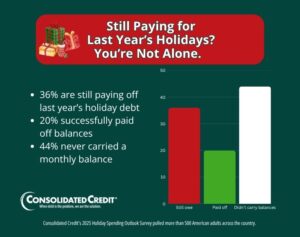
Just 39 percent of those surveyed said they're still paying off credit card bills from last year's holiday spending.

That number seems high, but it's down from 54 percent the year before, said Gary Herman, president of the national financial counseling agency.

"I think people are getting smarter," he said. "They've learned a lot about their finances through the lean times with trial and error."

Financial education, stressed in programs developed by educators, bankers, nonprofit organizations and even credit card companies, appears to be making a difference.

"The typical customer that we're seeing is definitely much better educated than they were before," Herman said. "Their financial situation is usually outside of what they could control -- they're temporarily out of work, or there's an illness or divorce."

In another positive sign, 70 percent of those surveyed vowed not to make the same mistake again of charging too many gifts on credit cards. They also vowed to pay off their holiday credit card purchases within three months.

Last year, more than 27 percent said they did not use credit to buy gifts, and less than 10 percent said they charged between $750 and $1,000.

Seventy-five percent of respondents said they would like to pay off all their unsecured debts in 2005 if they can. Herman said putting such statements out bodes well for consumers trying to head in the right financial direction.

As far as holiday spending goes, consumers are feeling better than last year. Half of those surveyed said they plan on spending more this holiday season, 30 percent said they will spend the same, and 18 percent said they will spend less.

Last year, only 13 percent said they planned to spend more during the holidays, whereas a whopping 58 percent said would spend less.

This new confidence is not quite as exuberant as what the National Retail Federation survey suggests.

That survey found that the average consumer plans to spend $702.03 on the holidays, up 4.5 percent over last year. The CCS survey showed that only 35 percent of consumers plan on spending between $500 and $1,000, however. Of the rest surveyed, 27 percent planned on spending $300-$500, 20 percent planned on spending $200-$300, and 14 percent planned on spending between $100 and $200.

Herman offers two keys to financial success in holiday spending: Make a plan and stick to it.

"People do tend to spend less with a plan," he said.

Another good idea is to work with family members to limit spending on gifts. Some other holiday spending tips:

. You can save as much as 20 percent by buying food and drink for holiday entertaining at discount warehouses.

. People spend as much as 30 percent more using credit cards instead of cash. If you use a card, use only one to consolidate your spending.

. Save receipts. Often items go on sale after the holidays. You can sometimes get a refund for the difference. Check store policy before going back.

. Shop alone and not while you're tired or hungry.

. Be creative. A jar of homemade cookies, a framed picture of your child, or an "event" like a movie or theater performance for your niece or nephew may mean a lot more than a store-bought gift.