Debt-Free Holiday Budget Guide
Contributors:


The holiday season is among the busiest times of year for shopping and spending. It’s easy for even careful budgets to get stretched when gifts, gatherings and bonuses all arrive at once. But spending more doesn’t have to mean getting into debt.
This guide will walk you through how to set a sensible holiday budget, use the free planner tool to track your costs, and adopt thoughtful strategies to avoid unnecessary charges. You’ll learn how to:
- Plan your gift list and set realistic spending limits
- Incorporate travel, food, décor and hosting expenses without surprises
- Spread out your purchases so you don’t rely on credit at the last minute
- Recognize and defuse common traps that lead to holiday debt
Whether you’re working with a modest budget or aiming to balance generosity and financial responsibility, the goal is the same: enjoy the season without sacrificing your financial health.
How to Build a Holiday Budget
- Write down everyone you plan on gifting this year.
- Decide what you want to buy for each person, then comparison shop to determine the price of those items.
- Now use the holiday spending planner below to build your holiday gift budget.
- Add in all your other holiday expenses, including: decorations, travel costs, postage and shipping, food and entertaining.
- Total it up to see how much money you need to cover the purchases.
- Compare this to the free cash flow / savings you have available to spend this year.
- Cut back as needed to keep your expenses in line with your available funds.
- Use our holiday spending checklist to make sure you’ve covered all the expenses you need for the holidays.
Why cash flow is key at the holidays
The reason you want to increase free cash flow in your budget as much as possible is so you can avoid taking on holiday debt. With so many out-of-budget expenses during the holiday season, it’s easy to run out of cash and turn to your high-interest credit cards to get you through the season.
And people often do the same thing every year – you spend until you run out of cash, then switch to credit so you can keep spending in order to make the holidays perfect for everyone. You make a conscious decision to ignore your debt until after the holidays, then you feel the floor drop out when you finally get around to checking your balances in January. And since credit cards have such high interest rates, you spend most of the year paying off last year’s holiday debt until you repeat the cycle all over again.
More cash flow breaks that cycle. You can pay for purchases in cash, rather than turning to high interest credit cards. This helps you save money, because you’re not adding finance charges to your holiday purchases.
Close spending leaks and cut expenses in your budget
Aside from getting an extra job or selling some of your stuff, the easiest way to improve cash flow is to close spending leaks in your budget. In most cases this involves one of two things – either you close spending leaks in your budget or you cut discretionary expenses temporarily during the holiday shopping season.
Spending leaks. A spending leak is where you’re spending more money than you have set in your budget or more than you should be for a particular expense. For instance, maybe your food budget is set at $100 per week, but you see you’re actually spending $180. You look at your monthly transactions and see you’re going out to lunch with coworkers and spending too much every weekday afternoon. Take your lunch every day – or even just a few days – and you’ve closed that spending leak a bit.
Discretionary expenses. These are all of the nice-to-have expenses in your budget. Trips to the salon, entertainment, subscriptions, paid accounts, memberships, tithes – it’s everything you like to do in a given month, but don’t absolutely need to live and work effectively. During the holidays, cut some discretionary expenses. Consider that you don’t need a hefty entertainment budget if you’ll be spending more time with the family. See if you can suspend streaming media accounts or cancel a few that overlap. Remember, you can always introduce discretionary expenses back in once you’ve gotten through the holidays successfully.
When is the right time to start shopping?
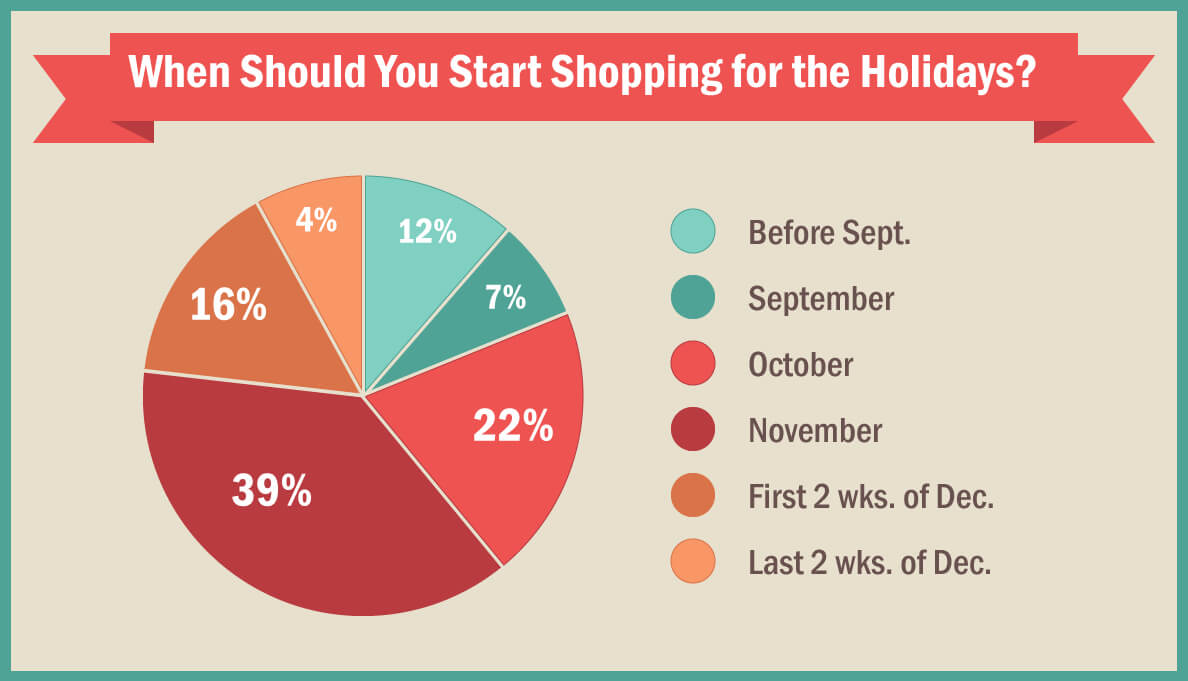
The earlier you begin shopping for the holidays, the less likely you are to rely on credit cards. More time means more paychecks to absorb the cost. This is why we’re fans of starting as early as possible because it helps you avoid debt. In fact, shopping year-round can be a good strategy, so you can buy items as they go on sale.
Here is a quick look at when most people shop for the holidays:
4 Ways to Avoid Holiday Overspending
#1: Shop smart during major sales events
Seasonal sales can be a great time to find deals on specific items – if you plan ahead. Don’t assume every promotion is a bargain. Compare prices across stores, set a spending limit before you shop, and avoid impulse buys that can erase your savings.
Get more tips for shopping smart on Black Friday and Cyber Monday »
#2: Protect your money when shopping online
Online retailers often use limited-time deals and countdowns to get shoppers to spend more. Before you click “buy,” double-check return policies, shipping fees, and website security. Stick to your budget and use a credit card with purchase protection when shopping online.
#3: Help your kids build a gift budget
Instead of giving in to every wish list item, use the holidays to teach your children about budgeting. Set limits together – whether by cost or number of gifts – and help them create a mini budget for each person on their list.
Learn how to use the holidays as a budgeting lesson »
#4: Plan carefully for big holiday meals
Holiday gatherings can get expensive fast. Plan your menu early, measure portions, and ask guests to contribute dishes. Remember that large meals don’t need endless desserts — keeping it simple saves money and reduces waste.
Get 10 tips for feasting without feeding your credit cards »
10 Tips for Avoiding Holiday Debt
Even with a solid holiday spending plan, you may find yourself going overboard. That usually means pulling out the plastic to charge those extra purchases. The following tips can help you stay on budget so you don’t end the holiday season with more debt than you intended!
Cut back regular costs in your household budget to increase the cash flow you have available for holiday spending. Take your lunch to work, cook at home instead of dining out, and don’t buy clothes or home goods (put them on your list). You can also plan ahead to avoid expenses like car maintenance or vet visits for your pets around the holidays.
Once you complete your holiday budget, take the shopping list with you wherever you go. Save it on your smartphone so it’s always with you. And make sure you have it even if you shop online or through an app. Retailers are very good at putting online ads in front of you to get you to spend more. Stick to your list and avoid impulse purchases.
We’re not kidding! Take your credit cards out of your wallet and find a big glass or jug you can fit them in. Then fill it with water and stick it in the freezer. With your credit cards stuck in ice, you won’t be able to use them to overspend. At the very least, you’d have to wait until the ice melts to get to them. That gives you time to reconsider using them, which can help keep you on track.
Buying individual, personalized presents for everyone that you know is expensive. If you have more than 10 names on your gift list, it’s probably time to cut back. Review everyone you’re gifting and take one name off the list. If you really can’t find anyone to cut, then it’s time to consider bulk gift options or handmade gifts.
Early reservations reduce the cost of airfare and accommodations. Bundling flights, hotels and car rentals usually gives you an even better deal. Start comparison shopping for your flights early and use Consolidated Credit’s Tips for Cutting Air Travel Costs to get the best price possible.
Instead of paying two different professional services to take care of your house and pets while you’re gone, find a responsible teenager in your neighborhood who wants to earn some extra cash. Show them everything they need to take care of while you’re gone – house care, watering plants, feeding and walking pets. Paying a teen will cost less than professional services and let you group everything together.
If you love to decorate for the holidays, you know costs can get out of control quickly. Instead of buying new stuff this year, rearrange everything that you have already. You can also set up a decoration swap party with friends or family that don’t live in your neighborhood. Each person brings items they’re willing to trade. Then you swap stuff out and everyone gets to have “new” decorations. Just make sure to agree, in advance, how you want to cover costs for damaged or broken items – accidents happen.
This applies to meals, parties and extended family visits. For meals and parties, ask your guests to either bring a dish or bring the hard liquor they wish to drink; you provide mixers and nonalcoholic beverages. Additionally, if your house looks more like a hotel during the holidays, as your guest to chip in a few bucks to cover costs for their stay. A little bit can help with your budget and it’s still much cheaper than them booking a hotel.
Instead of spending all your energy focusing on the stuff you need to buy, focus on creating a new family tradition. Set up a family holiday movie night, plan a bonfire, pack everyone into the car to take a Christmas light tour, or volunteer as a family to help a charity, such as Toys for Tots. Planning an inexpensive new tradition will help you make memories instead of amassing debt.
If you end up charging anything for the holidays – whether it’s on purpose to earn rewards or because you ended up overspending – don’t decide to ignore your balances until the New Year. Once people start running up balances at the holidays, the instinct is to ignore the debt until the holidays are over. You end up making a conscious decision to charge whatever you need and worry about the debt next year. But that’s a recipe for a bad start to your New Year.
Instead of ignoring your balances, keep track of them and make sure they stay manageable. If you see that the total is getting too high for you to repay on your own, don’t wait to get help.
If holiday overspending leads to credit card debt, talk to a certified credit counselor to find a solution today.
One last thing when shopping for the holidays…
Being the year’s busiest shopping season also means that the holidays put you at a higher risk of identity theft. As you shop for the holidays – both in-store and online – take steps to protect against ID theft and credit fraud.


